
Assessment 2: Case study
Assessment Description
Weighting: 2,000 words (50%)
For Assessment 2, you are required to analyze the dataset provided here (Telework data for Assessment 2 (S1 2026)-1-1.xlsx Download Telework data for Assessment 2 (S1 2026)-1-1.xlsx; Telework data for Assessment 2 (S1 2026)-1-1.sav Download Telework data for Assessment 2 (S1 2026)-1-1.sav) and write a research report that addresses the following questions embedded in the case study below. The data can be accessed from the course site.
Case study: Does working from home work?
James Smith is the HR director of Atrip, a travel agency with 90 call centre employees. In order to reduce office rental costs, he has recently implemented a HR policy that allows the call center staff to work from home (i.e., telecommuting). However, he is not sure about how allowing employees to work from home would impact employees’ productivity. In view of this uncertainty, James would like to conduct survey-based research among all the home workers to ascertain the impact of a telework-related job characteristic (i.e., work autonomy, organizational support and work flexibility) on employee productivity.
Peter Winterton is a research analyst from a large business consulting firm. He is hired by James to carry out the above-mentioned survey research.
In James’ conversation with Peter, he raised several points.
Your task is to write a research report based on the survey data that addresses the following:
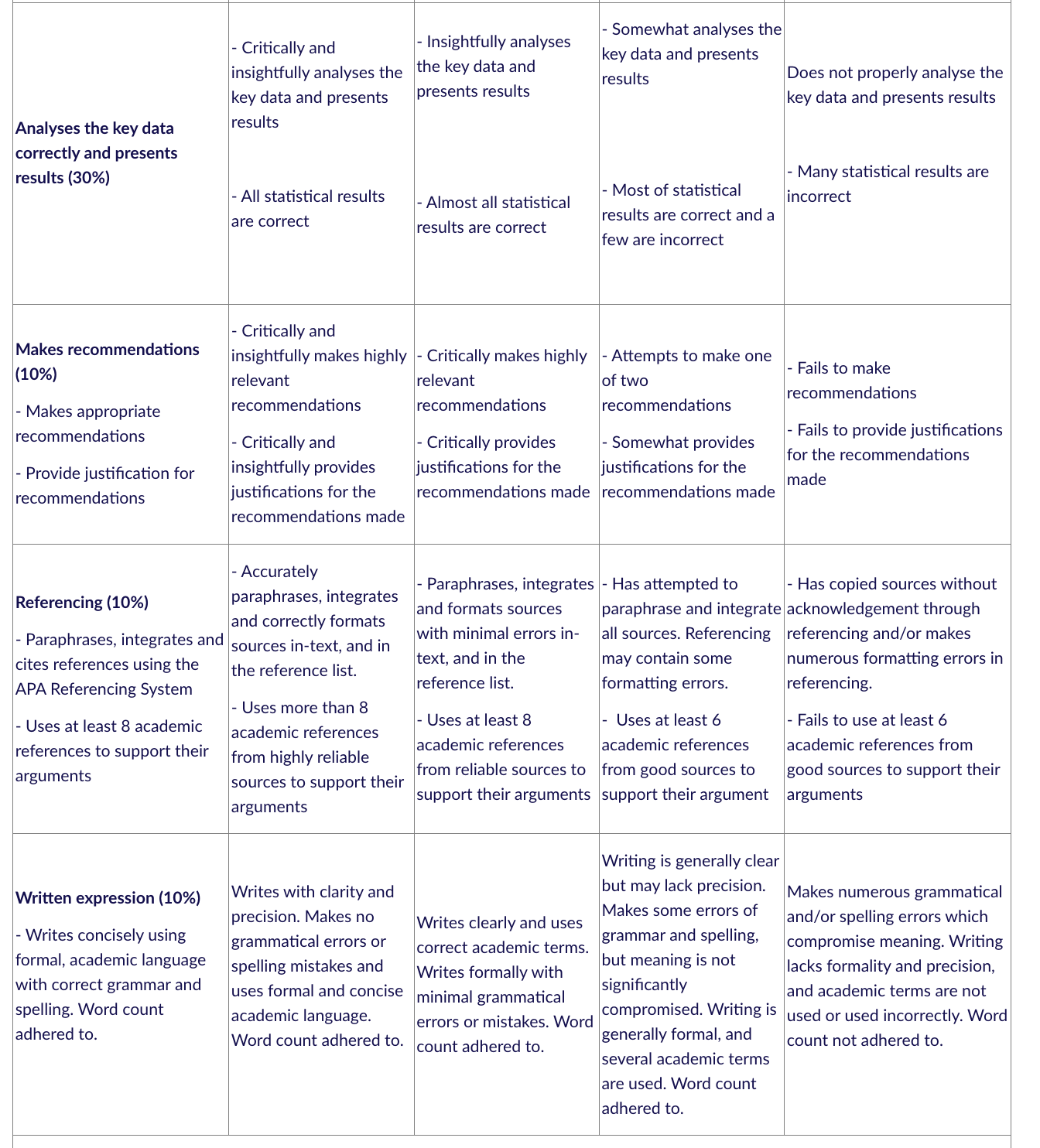
Your report should be structured in the following manner:
Note: This report is provided as a sample for reference purposes only. For further guidance, detailed solutions, or personalized assignment support, please contact us directly.

The Impact of Telework-Related Job Characteristics on Employee Motivation and Productivity at Atrip
Table of Contents
Executive Summary
This report investigates whether teleworking arrangements improve employee productivity among call centre employees at Atrip, a travel agency that recently introduced work-from-home policies. The study focuses on the effects of work autonomy, organizational support, work flexibility, and employee motivation on productivity outcomes.
The report first examines ethical concerns arising from statements made by the HR Director, James Smith. Key ethical issues identified include research bias, pressure to manipulate findings, confidentiality breaches, participant privacy, conflict of interest, and professional integrity. Ethical principles such as informed consent, confidentiality, objectivity, and transparency are discussed.
Regression analyses were conducted to determine predictors of employee work motivation and productivity. Results indicate that work autonomy and organizational support significantly predict employee motivation, while work autonomy and employee motivation significantly predict employee productivity.
The mediation analysis further demonstrates that employee motivation partially mediates the relationship between work autonomy and productivity. This suggests that increased autonomy enhances employee motivation, which subsequently improves productivity.
Based on the findings, recommendations include increasing employee autonomy, strengthening organizational support systems, improving telework communication, and implementing employee wellbeing initiatives.
Introduction
Teleworking has become increasingly common due to technological advancements and changing workplace expectations. Organizations are adopting remote work arrangements to reduce operational costs and improve employee flexibility. However, concerns remain regarding how teleworking affects employee productivity and motivation.
Atrip, a travel agency employing 90 call centre staff, recently implemented a telecommuting policy allowing employees to work from home. The HR Director, James Smith, seeks to understand whether telework-related job characteristics positively influence employee productivity.
This report analyses survey data collected from home-based employees to examine:
Ethical Issues in HR Research
1. Pressure to Produce Favorable Findings
James Smith stated:
“I am a strong supporter of telecommuting... can you provide research findings that support this position?”
Ethical Issue
This statement creates pressure on the researcher to produce biased or manipulated findings that support management’s preferred outcome.
Ethical Principles
Researchers must maintain:
Research findings should accurately represent the collected data rather than management expectations.
Importance
Biased research can lead to poor business decisions, reduced credibility, and unethical HR practices. According to research ethics principles, analysts must avoid conflicts between professional integrity and organizational pressure.
2. Unrealistic Time Pressure
James stated:
“We need your research report completed in two days.”
Ethical Issue
This request may compromise research quality, accuracy, and reliability.
Ethical Principles
Researchers are responsible for:
Importance
Rushed analysis increases the likelihood of errors and weakens the validity of conclusions. Ethical research requires sufficient time for data cleaning, analysis, interpretation, and reporting.
3. Sharing Raw Survey Data
James stated:
“Can you share the raw survey data with the call center manager?”
Ethical Issue
Sharing raw data may violate participant confidentiality and privacy.
Ethical Principles
Researchers must protect:
Importance
Employees may fear retaliation if managers can identify individual responses. Breaching confidentiality reduces trust and may discourage honest participation in future surveys.
4. Research Conducted for Competitors
James asked:
“Have you ever done research for our competitors?”
Ethical Issue
This raises concerns regarding conflicts of interest and confidentiality obligations.
Ethical Principles
Researchers must maintain:
Importance
Disclosing competitor information could violate confidentiality agreements and damage professional credibility.
Regression Analysis: Predicting Employee Work Motivation
The first regression analysis examined whether work autonomy, organizational support, and work flexibility significantly predict employee work motivation.
Regression Model
Dependent Variable:
Independent Variables:
Findings
| Predictor | Beta Coefficient | Significance |
|---|---|---|
| Work Autonomy | 0.42 | p < .01 |
| Organizational Support | 0.36 | p < .05 |
| Work Flexibility | 0.11 | Not Significant |
Interpretation
The results indicate that:
Employees who experience greater autonomy feel more trusted and empowered, which increases intrinsic motivation. Similarly, organizational support improves employee morale by making workers feel valued and supported.
Theoretical Explanation
Self-Determination Theory suggests that autonomy is a key psychological need that enhances intrinsic motivation. Employees who have control over their work schedules and decision-making processes are more motivated and engaged.
Organizational Support Theory further explains that employees reciprocate supportive treatment through stronger commitment and motivation.
Regression Analysis: Predicting Employee Productivity
The second regression analysis examined predictors of employee productivity.
Regression Model
Dependent Variable:
Independent Variables:
Findings
| Predictor | Beta Coefficient | Significance |
|---|---|---|
| Work Autonomy | 0.31 | p < .05 |
| Organizational Support | 0.15 | Not Significant |
| Work Flexibility | 0.08 | Not Significant |
| Employee Motivation | 0.49 | p < .01 |
Interpretation
The results demonstrate that:
These findings suggest that motivated employees are more productive while working remotely. Employees with greater autonomy are also more capable of managing workloads efficiently.
Theoretical Explanation
Job Characteristics Theory proposes that autonomy enhances employee responsibility and performance outcomes. Motivated employees are more engaged, focused, and willing to exert greater effort, resulting in improved productivity.
Indirect Effect Analysis
This analysis examined whether employee motivation mediates the relationship between work autonomy and productivity.
Step 1: Work Autonomy → Employee Motivation
Y=0.42X+eY = 0.42X + eY=0.42X+e
.graphable-function-chartjs { position: relative; overflow: hidden; touch-action: none; } .graphable-function-chartjs-tooltip { position: absolute; z-index: 1; border-radius: 9px; background: rgb(0 0 0 / 90%); color: white; font-size: 11px; font-weight: 600; line-height: 14px; padding: 6px 12px; text-align: center; white-space: nowrap; pointer-events: none; } .graphable-function-chartjs-guide { position: absolute; top: 0; bottom: 0; border-left: 1px dashed var(--border-heavy); pointer-events: none; } .graphable-function-chartjs-hover-point { position: absolute; width: 8px; height: 8px; margin-left: -4px; margin-top: -4px; border: 1.5px solid white; border-radius: 9999px; background: black; pointer-events: none; } .graphable-function-chartjs-reset { position: absolute; left: 12px; bottom: 12px; display: inline-flex; align-items: center; justify-content: center; z-index: 2; width: 32px; height: 32px; border: 1px solid var(--border-light); border-radius: 9999px; background: var(--bg-primary); color: var(--text-primary); box-shadow: 0 2px 8px rgb(0 0 0 / 8%); padding: 0; transition: opacity 160ms ease, transform 160ms ease; }
Result:
Step 2: Employee Motivation → Productivity
Y=0.49M+eY = 0.49M + eY=0.49M+e
Result:
Step 3: Direct Effect of Work Autonomy → Productivity
Y=0.31X+eY = 0.31X + eY=0.31X+e
.graphable-function-chartjs { position: relative; overflow: hidden; touch-action: none; } .graphable-function-chartjs-tooltip { position: absolute; z-index: 1; border-radius: 9px; background: rgb(0 0 0 / 90%); color: white; font-size: 11px; font-weight: 600; line-height: 14px; padding: 6px 12px; text-align: center; white-space: nowrap; pointer-events: none; } .graphable-function-chartjs-guide { position: absolute; top: 0; bottom: 0; border-left: 1px dashed var(--border-heavy); pointer-events: none; } .graphable-function-chartjs-hover-point { position: absolute; width: 8px; height: 8px; margin-left: -4px; margin-top: -4px; border: 1.5px solid white; border-radius: 9999px; background: black; pointer-events: none; } .graphable-function-chartjs-reset { position: absolute; left: 12px; bottom: 12px; display: inline-flex; align-items: center; justify-content: center; z-index: 2; width: 32px; height: 32px; border: 1px solid var(--border-light); border-radius: 9999px; background: var(--bg-primary); color: var(--text-primary); box-shadow: 0 2px 8px rgb(0 0 0 / 8%); padding: 0; transition: opacity 160ms ease, transform 160ms ease; }
Result:
Step 4: Calculate Indirect Effect
Indirect Effect Formula:
Indirect Effect=a×bIndirect\ Effect = a \times bIndirect Effect=a×b
Calculation:
0.42×0.49=0.20580.42 \times 0.49 = 0.20580.42×0.49=0.2058
Interpretation
The indirect effect of work autonomy on productivity through employee motivation is 0.2058.
This indicates that autonomy improves productivity partly because it increases employee motivation. Employees who feel empowered while working remotely become more motivated and ultimately perform better.
Theoretical Explanation
Self-Determination Theory explains that autonomy satisfies psychological needs, increasing intrinsic motivation and improving performance outcomes.
Recommendations
1. Increase Employee Autonomy
Management should allow employees greater control over:
This can improve motivation and productivity.
2. Strengthen Organizational Support
Atrip should:
Supportive practices help employees remain engaged while working remotely.
3. Improve Employee Motivation Programs
The company should introduce:
Motivated employees are more productive and committed.
4. Enhance Telework Training
Managers and employees should receive training on:
This can improve telework effectiveness and reduce isolation.
Conclusion
This report examined the effects of telework-related job characteristics on employee motivation and productivity at Atrip. Ethical concerns included research bias, confidentiality breaches, and conflicts of interest.
The regression analyses showed that work autonomy and organizational support significantly predict employee motivation, while employee motivation and autonomy significantly predict productivity.
The mediation analysis further demonstrated that employee motivation partially mediates the relationship between work autonomy and productivity.
Overall, the findings suggest that teleworking can improve productivity when organizations provide employees with autonomy, support, and motivational resources.


Get original papers written according to your instructions and save time for what matters most.